The rental car nearly got stuck twice on the way from Florence.
The GPS kept insisting a road existed where there was clearly a river running through someone's vineyard. This is February in wine country—the off-season nobody talks about when they're selling you the dream of Tuscany. The promotional photos are always from September, when the grapes have been harvested and the weather is still warm and the trattorias have their outdoor seating set up against rolling hills that look like desktop wallpapers.
Winter is different. The hills are brown instead of green. The roads are slick with mud. Some of the smaller wineries close entirely, their doors shuttered until March or April when the new season begins and there's actually something to taste.
I arrived at the first winery on my list with a confirmed reservation, an hour's drive through rain, and the kind of hunger that comes from skipping lunch to "maximize the tasting experience." The sign was there. The building was there. The door was locked.
A handwritten note taped inside the window said they'd reopened in March. I'd misunderstood something about the booking system—or maybe the booking confirmation I'd received was automated and didn't reflect the actual schedule. Either way, I was standing in the rain looking at a locked door with three hours until the next winery on my list opened.
So I drove to the next one. Same story. Closed. And the one after that.
By 3 PM I'd made exactly zero progress on my wine education and had developed a profound respect for the concept of advance planning. The Italian concept of la bella figura—making a good impression—seemed deeply ironic in that moment, standing in the mud in my rental car, getting nowhere.
I ended up in a tiny hilltop town called Pienza mostly because it showed up on a sign and I was hungry. The kind of hungry where you'll eat anywhere, trust anything, follow any smell. The town was small—maybe a thousand residents—built on a hill in the Val d'Orcia, famous for its pecorino cheese and its Renaissance city planning and the particular way the afternoon light hits the stone buildings.
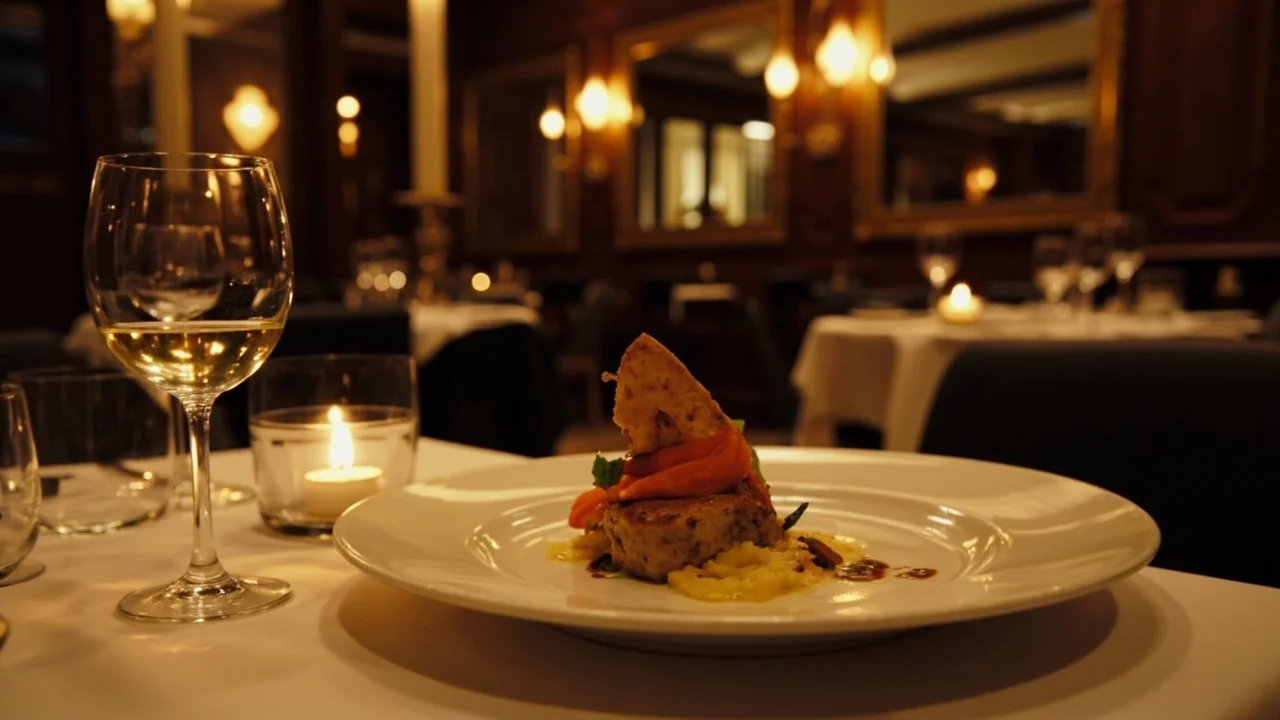
The restaurant I found was small, warm, and run by a woman who looked at me like I was either a blessing or a curse for showing up at the tail end of lunch service. She was in her sixties, with the kind of efficiency that comes from decades of cooking for a living. Didn't ask if I wanted a table. Just pointed at one near the fireplace and disappeared.
She brought me bread without asking, then some kind of bean stew that had been sitting on the stove all day. Then she disappeared again, leaving me alone with the fire and the bread and the stew.
The stew was extraordinary. Rich, thick, barely seasoned, the beans so soft they almost dissolved. I ate two bowls before I realized I should probably slow down. The bread was from a local bakery, still warm, torn into rough chunks. The butter was from her own cows—she told me this later, after I'd demolished most of the loaf.
When she came back, she brought a bottle of red from a winery I'd never heard of. Not the big names on my list—Not Biondi-Santi, not Antinori, not any of the producers whose bottles I'd paid to taste. Just a local winery that didn't have a tasting room or an online presence or any of the infrastructure that makes a winery discoverable to people like me, tourists passing through with more ambition than knowledge.
She poured me a glass. Poured herself one. Sat down across from me with the ease of someone who's worked in hospitality long enough to know exactly where the line is and when to cross it.
"You've been driving around all day," she said. It wasn't a question.
She knew because she'd seen my rental plates—the car had been parked badly, taking up space in front of the butcher's shop. This is a small place. Strangers stand out, especially ones who circle the same block three times looking for parking in a town where everyone knows everyone and parking is assigned by some invisible social contract.
I admitted I'd had a rough day. The closed wineries. The mud. The hunger.
She laughed. Told me about a winery that was open, that she'd known the family for thirty years, that they made wine the way her grandfather used to before the region got "discovered" by wine critics and wine tourists and wine writers who decided certain valleys were more worthy than others.
She made a phone call. Twenty minutes later I had an address.
What followed was the best afternoon of the trip.
The winery was a family operation—three generations in a converted barn, the grandfather already aging casks in the cellar when we arrived. He was eighty-two and had been making wine on this land since before his granddaughter was born. He didn't speak much English. His granddaughter translated, mostly through gestures and laughter and the universal language of people who care about the same thing.
They poured me four wines. I bought three bottles at prices that would scandalize anyone who'd paid tasting fees in Napa or Sonoma. These weren't wines meant for critics. They were wines meant for the table, for dinner, for the specific pleasure of drinking something made by someone you met by accident in a town nobody visits in February.
The grandfather walked me through the cellar himself, running his hand along the wooden vats like they were furniture. He pointed at one, said something in Italian. His granddaughter translated.
"He says this one is too young to drink," she said. "But he says you should come back in ten years."
I don't know if I will. Ten years is a long time. The world changes in ten years. But I thought about that wine aging in the dark, getting better slowly, while the rest of the world moved on without it. There's something appealing about that. Something worth protecting.
Driving back to Florence that evening, the rain had stopped. The hills were the particular green they only get in late winter, and the light was doing something theatrical across the valleys. The road wound through small towns I didn't stop in, past vineyards I didn't visit, under a sky that was doing its best to be dramatic.
I had two bottles of mystery wine in the back seat and absolutely no organized notes about tannin structures or oak regimens or any of the vocabulary wine people use to signal expertise. I had instead an address in Pienza and a phone number for a winery that didn't have a website.
Sometimes you go looking for education and find something else entirely.