My villa in Canggu cost three hundred dollars a night and had a private pool and a staff of three people who anticipated my every need before I knew I had the need. Someone was always around—the housekeeper, the gardener, the cook—appearing silently when I needed something, disappearing when I didn't.
This is not a flex. This is context. Bali at the luxury level is genuinely one of the most pleasant vacation experiences you can have on a reasonable budget. The service culture here is absurd in the best way. You feel, for those days or weeks, like a person of extreme importance whose comfort is the entire economy's purpose.
The problem, which everyone writes about, is the crowds.
Seminyak Beach on a Saturday afternoon looked like a festival. Beach clubs lining the shore, every one of them playing different music, the surfers fighting for waves with the Instagram models fighting for angles. The traffic on the main road was genuinely bad in a way that made me question every life choice that had led to me being in a taxi in that specific moment, going nowhere fast.
I lasted three hours before retreating to my villa and ordering room service. The villa had AC, a pool, silence. The beach had noise, crowds, a specific kind of competitive energy that wasn't relaxing.
But.
Bali is big. And most of the content you'll find online focuses on the same fifteen locations because those are the locations people can find without speaking Indonesian or doing research.
I hired a driver—his name was Wayan, which is the most common Balinese name, like John in the US, so I always had to specify which Wayan because there were apparently four of them operating in the area—and told him I wanted to see the island. Not the tourist parts. He laughed, which I later learned was his standard response to requests he got often from foreigners who'd read too many travel articles.
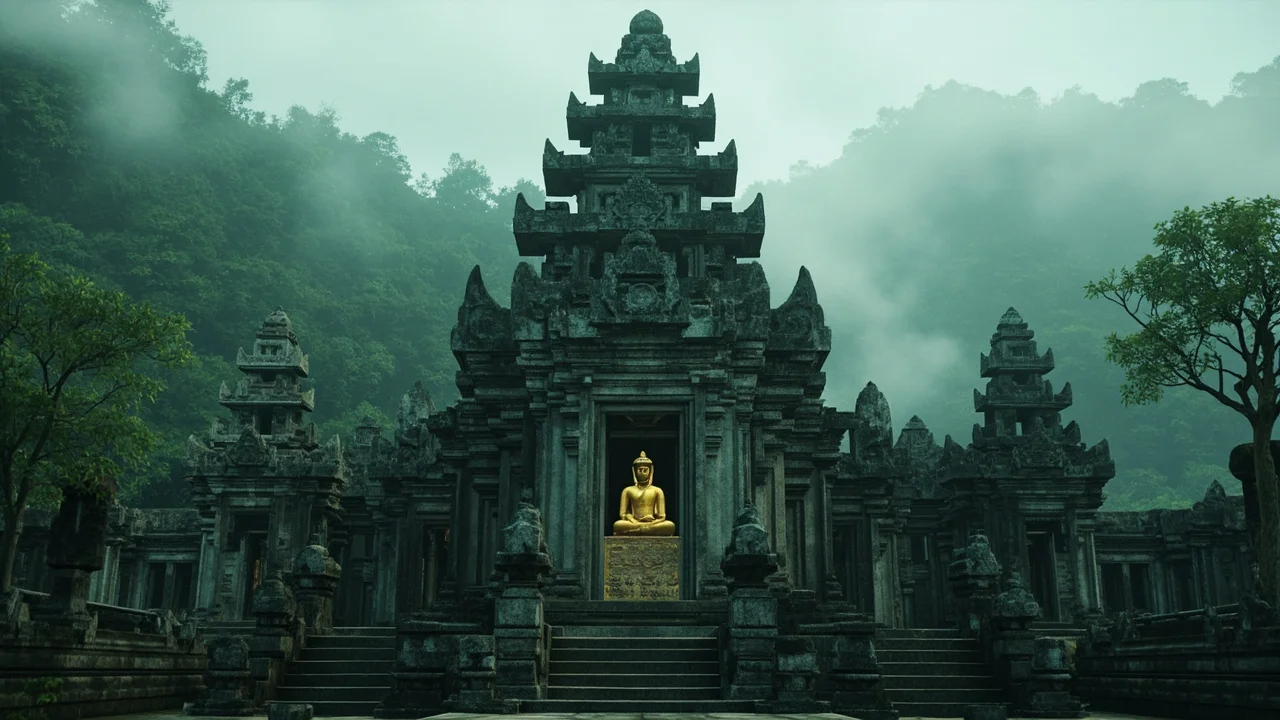
We went east. To a temple so far from any tourist route that the priest seemed genuinely surprised to see a visitor. He gave us a personal tour, in English that was better than my actual English, explaining the history of the site and the specific rituals that took place there, the offerings that were made, the ceremonies that marked the calendar.
The temple overlooked a black sand beach that was completely empty. Waves crashing on volcanic rock. No music. No vendors. Just the ocean and the wind and a few local kids diving from a cliff into the water below.
Wayan told me his grandmother still lived in the village near the temple. He grew up farming rice in terraces that tourists had to hike for hours to reach. Now those terraces were famous. His family had converted the extra rooms into homestays. Some things had gotten worse—traffic, prices, the pace of change—but economically his village had benefited in ways that were complicated and uneven.
"Not all good, not all bad," he said. "Same like everything."
That phrase stuck with me.
Bali is crowded in the places that are crowded. It's empty in the places that are empty. It costs too much in the places where tourists have driven prices up. It costs almost nothing in the places where tourists don't go. The development has destroyed some natural beauty and created infrastructure that makes other beauty accessible.
The beach clubs are genuinely fun. The sunsets at Uluwatu are genuinely moving. The rice terraces are genuinely worth the crowds if you go at the right time.
And the east coast temple and the empty black sand beach and Wayan's grandmother's village still exist, if you make the effort to find them.
Bali is not one thing. It's a thousand contradictions that somehow coexist.
My advice: go. See the famous parts. They're famous for a reason. Then hire a Wayan and tell him you want to see the real island. He'll know what to do.
You just have to be willing to go where the tourists aren't. That's usually true everywhere.
On my last night, I went back to the beach club I'd been to on my first day. The same crowd, the same music, the same beautiful people doing beautiful things. I ordered a drink and sat by the water and watched the sunset, which was as dramatic as sunsets in Bali always are, like the island was showing off.
A woman next to me was taking selfies. A lot of selfies. Different angles, different poses, different lighting. She was by herself, which made it more complicated—she had to time the shots, run back to check the results, adjust, repeat.
I watched this go on for maybe twenty minutes. Then she put her phone down and just looked at the ocean.
For a second, she seemed surprised to find it still there. Like she'd been so busy documenting that she'd forgotten to experience.
We made eye contact. She laughed, a little embarrassed. "I'm on a content break," she said. "Started today."
I said I'd been on one for weeks. Neither of us seemed to know what that meant exactly, but it felt true.
We watched the sunset together, two strangers who'd both come to Bali looking for something they couldn't quite name.
The light went through its performance. The colors did what colors do. Then it was dark and we went back to our respective lives.
I still don't know what I was looking for in Bali. Maybe nothing. Maybe just a break from the ordinary, which is what travel often is.
Bali gave me that. Even with the crowds and the traffic and the price of a villa that would have been cheaper in Portugal.
Some places earn their reputation. Bali has earned its complications.